
When work has drained your energy
Burnout is neither laziness nor a lack of vocation: it is the result of chronic work stress that could not be managed. I explain what it is, how it builds up and what helps you get out of it, with research-based support.
What is burnout?
The World Health Organization defines it as a syndrome resulting from chronic workplace stress that has not been successfully managed. ICD-11 classifies it as an occupational phenomenon, not as a medical condition, and specifies that it should not be used to describe experiences in other areas of life.
It has three dimensions
Exhaustion
A feeling of running on empty: the tiredness is there as soon as you wake up and rest is no longer enough.
Distance and cynicism
You mentally detach from your work; irritation, weariness or a negative attitude towards what you do start to appear.
Reduced efficacy
You find it hard to concentrate, you make more mistakes and you feel you are no longer performing as well despite your efforts.
This is not just a rough patch: it is something that lasts and often sets in gradually.
Warning signs
Everyone experiences it in their own way, but some signs come up often:
In your body
Tiredness that rest does not fix, sleep problems, headaches, back or stomach pain, lower defences.
In your emotions
Irritability, feeling at the end of your rope, sadness, a sense of helplessness or of being trapped.
In your thoughts
Difficulty concentrating, forgetfulness, negative thoughts about your work and about yourself.
In what you do
You stop exercising, you sleep worse, you rely more on coffee, alcohol or screens to keep going, and you can no longer switch off.
If you also feel very low most of the time or have thoughts of not wanting to live, seek help quickly: it may be depression, which also needs treatment.
How do we reach exhaustion?
The phases of stress
Stress is a natural response that prepares us to act. In moderate doses it improves motivation and performance. The problem comes when the demand continues without a break. Hans Selye’s classic model, the general adaptation syndrome, describes it in three phases:
Alarm
The body activates in response to a demand: more tension, more energy, more attention.
Resistance
You keep the activation going to hold on. If it lasts too long, your sleep, appetite, mood or concentration change.
Exhaustion
Resources run out and the body loses its ability to recover. This is where burnout takes hold.
The type of situation matters a lot: stress increases with uncertainty, ambiguity, lack of control and duration. So do certain personal patterns, such as perfectionism, difficulty delegating or putting work above everything else, which psychology has called Type A behaviour.
That is why a few days off are not enough: you need to look both at your working conditions and at the way you cope with them.
What research says about coping with it
Prevention and intervention programmes for work stress combine three types of techniques:
Physiological techniques
Relaxation, breathing control or biofeedback, to lower the activation of the body, which stays “switched on” with chronic stress.
Behavioural techniques
Assertiveness, setting limits, problem solving and time management, to change the way you respond to demands.
Cognitive techniques
Cognitive restructuring and stress inoculation, to review rigid demands, perfectionism and the way you appraise situations.
Looking after your lifestyle is also recommended: sleep, exercise, breaks, leisure and social support. It is not an add-on, it is part of the treatment.
Your environment matters too
Burnout is not only an individual problem: workload, recognition and team support weigh heavily. Part of the work is seeing what you can change, what depends on others and which decisions you want to make.
How we work on burnout
Assessment
We look at your work and personal situation and, when useful, we use validated questionnaires, for example on burnout or stress, to have a starting point.
Recovering energy
First, stopping the spiral: rest, sleep, physical regulation and, if needed, coordination with your doctor (for example to assess sick leave).
Changing what wears you down
We work on limits, priorities, assertiveness and your relationship with your own demands, with tools from CBT and ACT.
Starting again on better foundations
We prepare your return to work, adjustments to your role or a change of direction if that is what you need, and relapse prevention.
I was a senior manager for years before dedicating myself to clinical work: I know work pressure from the inside.
What you can start today
Take real breaks
Short breaks during the day, away from screens. Breaks are part of the recommendations for preventing work stress.
Protect your sleep
Set a time in the evening to switch off from work and your phone. Sleep is one of the first things to suffer.
Separate what is urgent
Write down your tasks and mark what really depends on you. What you cannot control, take it off the list.
Get moving
Regular exercise helps to lower stress-related activation. Something moderate and regular is better than something intense now and then.
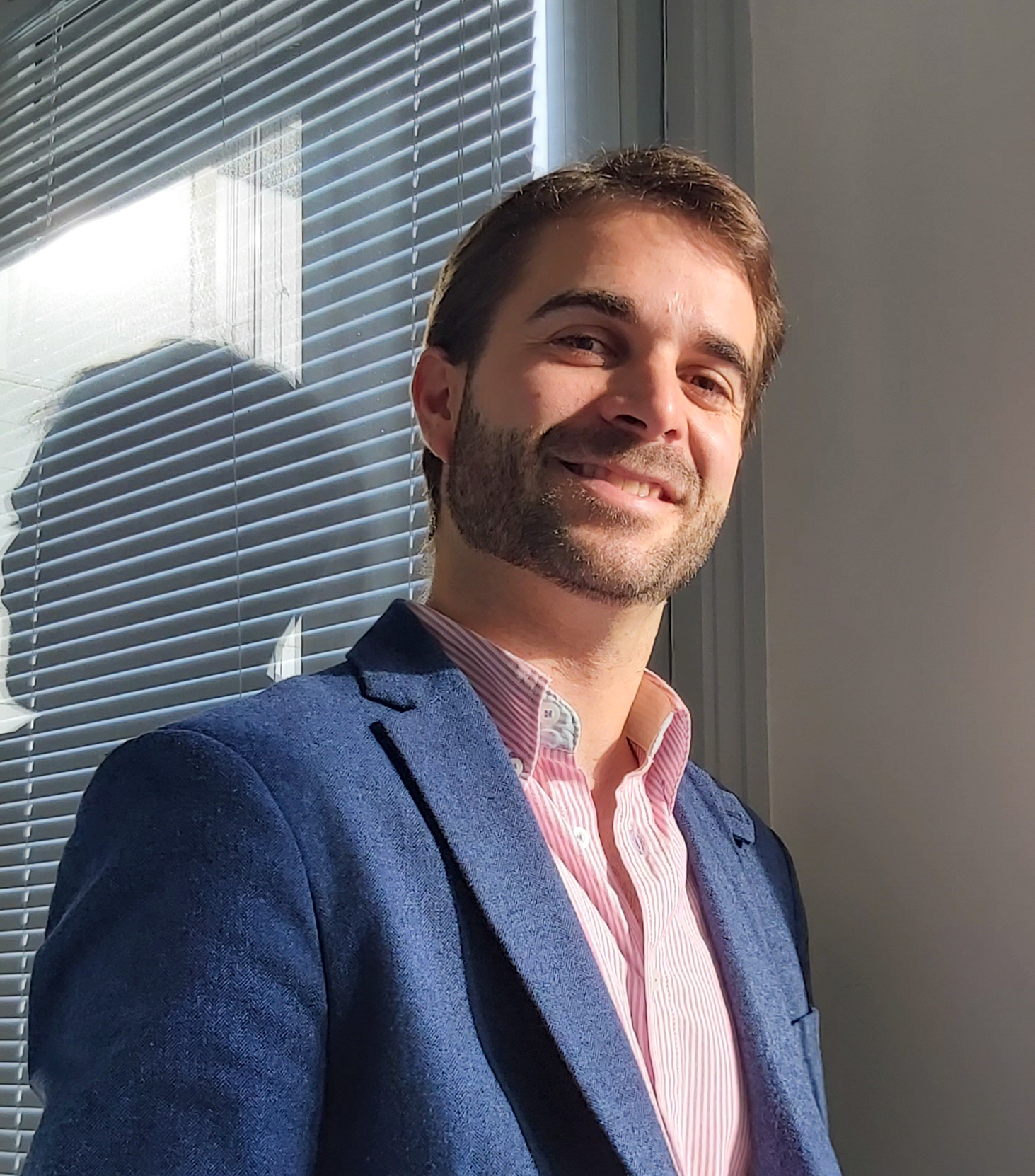
Gonzalo Garzo
Clinical psychologist · former senior manager
I have been a clinical psychologist since 2018, and I am also an anthropologist. For years I combined psychology with management positions (see my LinkedIn profile), before dedicating myself fully to clinical work.
I work with an integrative approach: third-wave CBT (ACT, DBT, mindfulness) and EMDR, adapted to each person’s needs.
I have lived in several countries and I work in English, French or Spanish, online or in La Rochelle.
Frequently asked questions
Is burnout an illness?
The WHO considers it an occupational phenomenon, not an illness. But it can have serious consequences for physical and mental health, and it often comes with anxiety or depression, which need treatment.
Do I need sick leave?
It depends on each situation. The decision is your doctor’s. In therapy, we can help you assess your situation and prepare your return.
How long does it take to recover?
It varies a lot depending on how intense the exhaustion is and on your working conditions. What matters is not to wait until you are at the end of your rope to start.
What if the problem is my job, not me?
Often it is both. We work on what depends on you and help you make decisions about the rest, including a possible change.
Shall we talk?
Sources
- World Health Organization (2019). Burn-out an “occupational phenomenon”: International Classification of Diseases.
- Guerrero Barona, E. and Rubio Jiménez, J. C. (2005). Estrategias de prevención e intervención del « burnout » en el ámbito educativo. Salud Mental, 28(5), 27-33.
- de Camargo, B. (2004). Estrés, síndrome general de adaptación o reacción general de alarma. Revista Médico Científica, 17(2).
- Barona, E. G. (1996). Salud, estrés y factores psicológicos. Campo Abierto, 13(1), 51-69.
- Fernández, J. and Blasco, T. (2003). Instrumentos para la valoración del estrés. In Gutiérrez et al. (Coords.), Instrumentos de evaluación en Psicología de la Salud. Alianza.
- Sandín, B. (2008). El estrés. In Belloch, Sandín and Ramos (Eds.), Manual de psicopatología, vol. II. McGraw-Hill.
This page is for information only and does not replace a professional assessment.